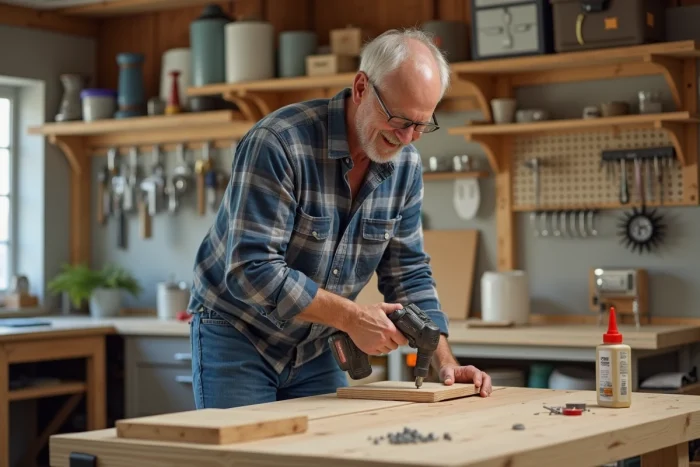
A magnetic screwdriver limits the loss of screws, yet few DIY enthusiasts think to make one themselves with a simple magnet. Classic masking tape, when poorly applied, can sometimes let paint through, but a two-coat application reduces this risk. Certain materials, like MDF, swell when exposed to too much wood glue, while a thin layer is sufficient to ensure strength. Planning your steps in reverse order helps avoid disassembling a freshly assembled piece of furniture to correct a forgotten mistake. Little-known tips can quickly change the game on the workbench.
Why DIY at home is attracting more and more people
DIY takes place in every home, a discreet engine of the evolution of our living spaces. As mastering one’s habitat becomes a priority, the practice is expanding. Saving money, gaining independence, meeting an immediate need: the momentum is building. DIY projects are multiplying, driven by the desire to personalize and optimize one’s space. The idea of a hobby reserved for a handful of insiders is forgotten: today, everyone dares to handle tools, whether urban or rural.
The home transforms into a testing ground: the beginner DIYer tries their luck on a first repair, a shelf cut to the right size, a coat of paint to refresh a room. Learning progresses step by step, and the search for reliable advice becomes a necessity. Tutorials, forums, specialized resources: the site bobolebrico.fr for DIY presents itself as a pool of practical solutions, accessible to all, whether starting out or already mastering some techniques.
Every May 24, World DIY Day highlights this enthusiasm. This event marked on the calendar reflects the vitality of the discipline and the connections woven around shared know-how. This collective energy, this exchange of tips and feedback, strengthens a support network where everyone progresses, where the home is renewed through the creativity and solidarity of those who inhabit it.
What are the smart reflexes to succeed in your first projects without complicating your life?
Approaching a DIY project starts with an obvious principle: proceed methodically. The enthusiasm of the beginning quickly encounters the constraints of materials, tools, and available time. First step: plan without rushing. Determine the goal, gauge the budget, visualize each phase in advance. A well-structured schedule helps maintain focus and prevents leaving a project unfinished due to discouragement.
Safety allows for no approximation. Working in a clear, well-lit space is already anticipating accidents. The right equipment: safety glasses, gloves, dust mask, should be within reach. Each tool has its specifics: a moment of inattention, and injury is never far away. Taking the time to protect oneself is gaining peace of mind.
It is advisable to gather the essential tools in a dedicated box: drill-screwdriver, hammer, screwdriver, level, tape measure, saw, pliers, cutter. These companions quickly become indispensable, whether hanging a picture or tackling a more ambitious project. Prioritize reliability: even a starter kit deserves decent quality.
Nothing replaces practical advice for progress: detailed tutorials, forums, videos, everything is accessible to guide step by step. Every difficulty has its solution, every doubt finds a tip. Online courses and specialized platforms support learning, regardless of the starting level.
Here are some key points to keep in mind to approach each project more calmly:
- Prepare your work environment.
- Equip yourself properly.
- Follow clear steps, without rushing.
- Don’t hesitate to consult reliable online resources.

Concrete ideas and tips to try today, even if you’re a beginner
The DIY project varies according to each desire, from small repairs to renewing a corner of the house. To start, it’s better to aim for accessible tasks: repainting a wall, installing floating shelves, transforming wooden pallets into an outdoor bench, or recycling glass jars for organization. These projects require little material, use simple tools, and provide the opportunity to master basic gestures.
Painting offers an immediate entry into the world of DIY: a well-chosen roller, protections on the floor, thin layers for a uniform finish. In carpentry, sanding and assembling boards invite creativity: custom shelf for the office, bench for the entrance, accent furniture for the living room. The level ensures everything is straight, and it’s best to avoid hasty fixings.
Recycling also emerges as a path to explore: reclaiming materials means aligning economy with ecology. Tutorials and exchanges available on specialized forums, often illustrated step by step, accompany each progression. And through social media, the community shares tips and feedback, helping to overcome difficulties and progress in real time.
To quickly gain experience, here are some accessible and formative project types:
- Carry out short interventions: change a faucet washer, customize a light fixture, build a wall storage.
- Adopt eco-friendly reflexes: reuse what can be reused, choose low-emission paints.
- Share your progress and your failures: mutual support accelerates everyone’s progress.
Home DIY opens the door to so many initiatives that it is up to each person to imagine the next one. Between two hammer strikes, ideas flow; tomorrow, it might be your turn to invent the tip that saves a whole generation of DIYers time.