
A colleague opens his new laptop, launches a photo editing program, and notices that the result comes out in a few seconds, without an internet connection. No cloud, no latency, everything happens on the chip. This shift towards local processing summarizes much of what is changing in the high-tech world this year: power is migrating to the device, regulations are framing what manufacturers can do with your data, and daily usage is being modified.
You can follow tech news on C Nouveau to gauge the speed at which these transformations reach the general public, but the most interesting part remains understanding what is actually happening in the products we buy.
On-device AI: when smartphones and PCs process everything locally
The most tangible trend this year concerns NPUs integrated into consumer processors. Microsoft, Qualcomm, Intel, and AMD have accelerated the deployment of chips equipped with dedicated neural computing units. The result: text summarization, contextual assistants, photo retouching, and video editing run directly on the machine.
In practice, the difference is especially felt in mobility. A photographer editing his shots on the go no longer needs to send each file to a remote server. An amateur video editor applies AI-assisted color corrections without opening a browser.

The interest goes beyond user comfort. Local AI reduces dependence on the cloud and limits exposure of personal data. Files remain on the device, addressing growing concerns about security and privacy. Feedback varies on the maturity of these functions across brands, but the direction is clear: the next cycles of laptop and smartphone renewals will be largely driven by this embedded processing capability.
AI Act and high-tech products: what European regulation changes
While manufacturers are multiplying AI functions, the legal framework is tightening. The European Parliament adopted the AI regulation (AI Act) on March 13, 2024, and the CNIL published its first guidelines for developers and users of generative AI in April 2024.
In concrete terms, these texts impose several constraints that modify product design:
- The user must be clearly informed when interacting with an artificial intelligence, whether it’s a voice assistant, a chatbot, or an automated suggestion in a photo application
- Safeguards govern the collection of training data, pushing manufacturers to offer privacy settings enabled by default
- Manufacturers must ensure transparency about the models used, including in functions presented as simple “automatic enhancements”
For consumers, the direct consequence appears right from the initial setup of a new device: more consent screens, prominently featured “local AI mode” options, and sometimes features restricted in Europe compared to other markets. We are starting to see notable differences between a smartphone sold in the United States and the same model marketed in France.
Low-power connected devices: tech in daily life without energy waste
The other underlying trend affects everyday connected devices. New sensors and IoT objects now prioritize low-power protocols and more sustainable materials. We are talking about air quality sensors, thermostats, connected locks, or activity trackers whose battery life is measured in months rather than days.
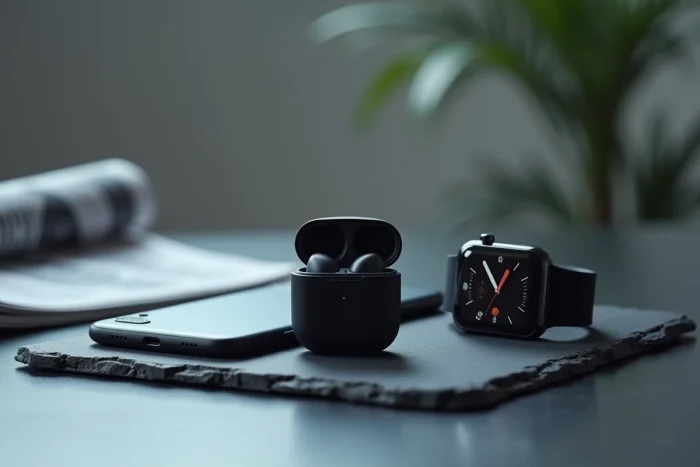
The goal is no longer to add functions but to reduce the energy footprint of each device. Protocols like Matter or Thread, which unify communication between objects from different brands, are gaining ground in new smart home installations.
Practically, this means that today one can set up a complete smart home system without multiplying proprietary gateways. A smoke detector communicates with a thermostat from another brand, all controlled from a single application. The promise has existed for years, but real interoperability is finally progressing.
Edge computing and personal cloud: where your data will be stored in 2026
The last point that deserves attention concerns the evolution of storage and processing of personal data. Edge computing (processing at the network’s edge, close to the user) is no longer just for businesses. Solutions for locally hosted personal cloud are emerging for individuals, in the form of small home servers or next-generation NAS incorporating AI functions.
The advantage is twofold: one retains physical control over their files while benefiting from automatic sorting functions, facial recognition on photos, or smart backup. These devices are still primarily adopted by a tech-savvy audience, but their simplified installation makes them accessible to a broader circle.
The convergence between edge computing and local AI outlines a usage where distant cloud becomes optional rather than mandatory for most daily tasks. More power in your pocket, fewer data transmitted to distant servers, and a regulatory framework that supports this movement.
The high-tech products that will be released in the coming months will bear the mark of this refocusing on the user and their immediate environment.