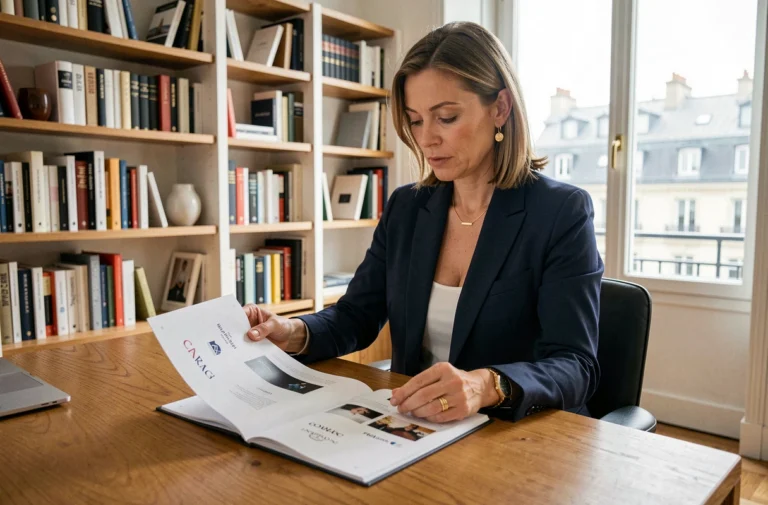
1.5 million euros: this is the fixed annual salary of Luca de Meo at Kering. To this already staggering sum, bonuses can triple the amount if performance meets expectations. The perks? Free shares, in-kind privileges, and a total that easily exceeds 6 million each year. These figures leave the standards of the CAC 40 far behind. Here, luxury is not limited to shop windows; it also shapes the paychecks of executives. The disparities are glaring. From one executive committee member to another, salaries vary, but one constant remains: in this industry, the brand justifies everything. Income levels are such that they are sometimes viewed with as much fascination as the collections themselves.
Executive Salaries in Luxury: A Key Issue for Understanding the Industry
Kering, the giant behind Gucci, wields a financial and symbolic power that has no equivalent in the global luxury market. The executive team at Gucci, composed of Marco Bizzarri and Alessandro Michele (until 2022), embodies this alchemy between creation and strategic management. The amounts received, far from being just a line in a financial report, tell the story of an industry where the valuation of talent and investor confidence sometimes hinge on millions. The question of the standard of living of executives fuels the reflection on fashion and luxury. Kering chooses to pamper its rare profiles, those capable of elevating a house to the pinnacle of contemporary expectations. This choice sustainably shapes the sector. The balance between creative vision and management rigor, embodied by the Bizzarri-Michele duo, guides Gucci’s trajectory. Gucci’s reputation rests on a customer experience refined to the smallest detail and ultra-targeted communication. The house relies on fine analyses like those of Gucci’s marketing on Life Actually, which precisely deciphers the targeted clientele. Delving into the salary policy of decision-makers is to decode the levers of a sector where every choice reflects the ongoing tension between heritage, boldness, and the conquest of new audiences. At Kering, the power of the group meets the uniqueness of Gucci: it is the tempo of a market that tolerates neither routine nor mediocrity.
How Much Do Kering’s Headliners Earn? Focus on Luca de Meo and His Peers
At Kering, the top of the pyramid is distinguished by a governance model that leaves little room for chance. Behind the shine of the boutiques, a handful of executives steer the group’s global growth. Luca de Meo, recently highlighted, is part of this club where compensation reflects the extent of the power exercised. The exact figures vary from year to year, but one thing is clear: under the watchful eye of François-Henri Pinault, the house favors an incentive policy based on performance and international influence.
To understand how these salaries are structured, here are the main pillars that compose them:
- A contractual fixed salary, which guarantees the serenity of strategic executives.
- A variable component, adjusted to financial results, mirroring Kering’s colossal revenue, which is counted in billions of euros each quarter.
- Stock options and exceptional bonuses, reserved for performances deemed extraordinary.
Among these profiles, Francesca Bellettini, Deputy CEO, and Armelle Poulou, CFO, find themselves alongside Luca de Meo in this circle where total compensation regularly exceeds one million euros per year. Their mission does not stop at financial management: it involves ensuring profitability, anticipating market trends, and preserving the identity of each house, with Gucci at the forefront. Luxury knows how to attract talents who can blend strategy, vision, and profitability. It is this mix that keeps the machine running, far from surface clichés.

Why Do These Levels of Compensation Spark So Much Debate?
The salary issue stirs the luxury sector, especially when the figures are laid out in public reports. Kering posts results that live up to its reputation: +7% sales in Europe, +24% on the North American continent. This dynamic fuels a reward policy where Marco Bizzarri, CEO of Gucci, and Alessandro Michele, former creative director, reach compensations that regularly exceed one million euros. Such amounts, rarely seen elsewhere, provoke reactions.
Gucci targets a well-defined target clientele: millennials and Generation Z, engaged, connected, and attentive to the consistency between image and reality. For these audiences, creativity, diversity, innovation, authenticity, and inclusivity are much more than keywords: they are demands. By removing fur from its collections, supporting UNICEF, or partnering with Girls’ Empowerment, the brand fuels its legitimacy strategy. But the question remains: how to combine exclusivity of the product with social exemplarity in a house that claims innovation and openness?
The debate focuses on the redistribution of value. The new generations, who represent nearly a third of the global population, expect brands to live up to their commitments. In this sector, executive compensation acts as a barometer of the tensions between excellence, customer experience, and social responsibilities. At Gucci and its group, the question is no longer just about luxury, but about a balance to be reinvented, at the intersection of social expectations and the quest for exception.