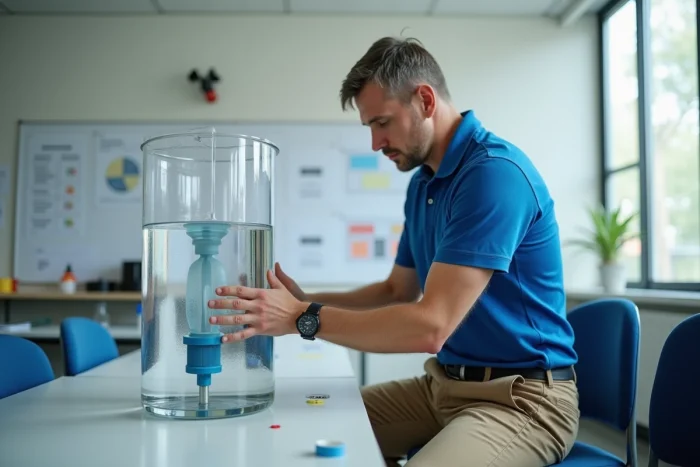
A flow can reverse without external energy input, provided that the arrangement of the conduits meets certain height and sealing requirements. Contrary to intuition, a liquid can rise up a slope before descending, as long as its endpoint is lower than its starting point. This mechanism, implemented since ancient times, can be found in water transfer installations, industrial devices, and even some household equipment. Variants of the process present specific constraints and advantages depending on the context of use.
The principle of the siphon: understanding a fascinating physical phenomenon
What strikes first about the siphon is the relentless logic that governs its operation. Nothing is left to chance: the flow of liquid depends as much on gravity as on atmospheric pressure. To start, all it takes is a difference in height between two points connected by a tube that is completely filled. This pressure imbalance sets the water in motion from the upper reservoir to the lower level, without mechanical intervention, solely thanks to the laws of fluid mechanics.
In this precise ballet, surface tension maintains the integrity of the water stream, while gravity enhances the flow: according to the Bernoulli equation, the steeper the slope, the greater the velocity of the flow. The result: as long as air remains outside the tube and the outlet is lower than the inlet, the flow does not weaken.
This process is found in everyday uses: flushing toilets, transferring liquid products, gravity irrigation networks. What is particularly surprising is the regularity and reliability of this seemingly elementary system. For those wishing to dissect the details of the subject and its variants, the principle of the inverted siphon provides a sharp overview of all its workings.
Ultimately, everything relies on a precise calculation between pressure and height. When properly configured, a siphon operates without a pump or mechanism: nature, well-framed, does the work.
What distinguishes the inverted siphon from other types of siphons?
Where the common use of the siphon relies on gravity, the inverted version disrupts this order: the liquid first engages in an ascent before descending. This feat relies on a often more pronounced pressure differential and flawless sealing. As soon as the slightest air bubble sneaks in, blockage is guaranteed.
In practice, this device opens up a realm of possibilities where terrain usually hinders engineers. Before continuing, here are several concrete examples where the inverted siphon makes perfect sense:
- Crossing valleys and natural obstacles during the installation of historical or modern aqueducts
- Sewage networks installed beneath roads, railways, or rivers, without deep trenching
- Irrigation systems capable of reaching enclosed or rugged land by exploiting the topography
This structural ingenuity helps limit the use of motors: gravity, pressure, and careful geometry are sufficient. But there is a downside: vigilance is required to prevent the presence of air, monitor the condition of the tubes, and maintain ideal pressures. The margin for error here is significantly smaller than with a classic siphon.
Each installation therefore requires advanced expertise, which calls upon both fluid physics and the foresight of technical teams. Prioritizing robust materials and impeccable configuration is a commitment to longevity – and the tranquility of the flow.
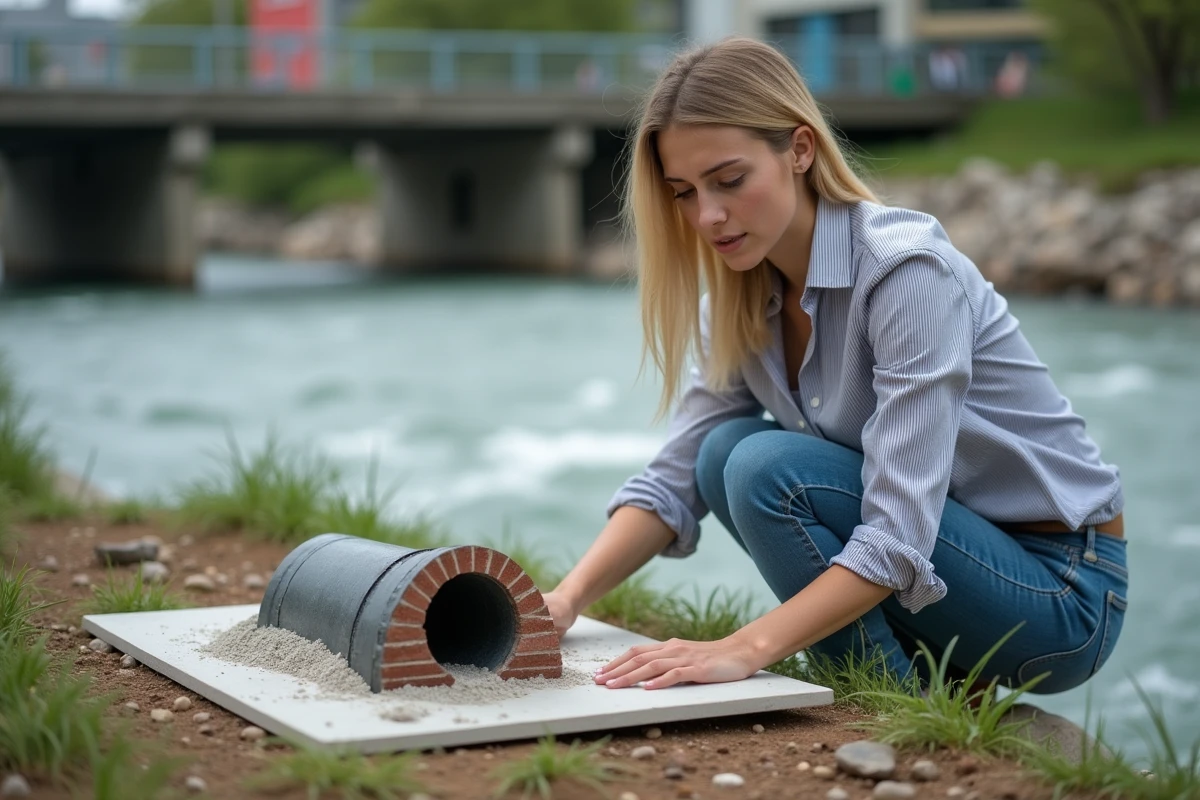
Concrete applications and historical examples of the inverted siphon, from the Roman aqueduct to modern engineering
Antiquity did not wait for modernity to play with this physical spring. The Romans brilliantly seized it by tracing the aqueduct of Lyon: here is a liquid that crosses an entire valley without a pump, constrained by height differences and the intelligence of atmospheric pressure. Water rises, crosses the terrain, then leaps to its new low point, never faltering, always guided by the geometry of the filled tube.
Today, this feat continues across many sectors. Communities rely on the inverted siphon to allow water or effluents to cross roads, rivers, or railways while minimizing excavation. Farmers use it in irrigation systems on slopes or between plots separated by a natural obstacle. Wastewater management, where every leak can become dramatic, also benefits from this physical trick, ensuring the continuity of transfer and the safety of the network.
This panorama of uses outlines a trajectory: far from being relegated to history or a few isolated cases, this technology literally irrigates our public space, discreetly yet powerfully. Where constraints seem to lock down the terrain, the inverted siphon offers invisible yet incredibly effective pathways. In the face of a troubled landscape, it becomes the unexpected ally of any visionary water policy.